Is Private Driving School Worth It? A Cost & Value Guide
Table of Contents
Is Private Driving School Worth It? The Core Question
Private Driving Lessons Cost: What You Actually Pay
Private Driving Lessons vs Driving School: Key Differences
Structure and Curriculum
Flexibility and Scheduling
Test Preparation and Outcomes
How Many Driving Lessons Do I Need to Be Ready?
Real Benefits of Professional Instruction
When Private Driving School Makes the Most Sense
Making Your Decision: Questions to Ask Before Enrolling
Frequently Asked Questions
Last Updated: October 18, 2026
Is Private Driving School Worth It? The Core Question
Whether is private driving school worth it depends on your situation, learning style, and goals. For most new drivers, professional instruction delivers measurable value, the real question is whether that value justifies the cost in your circumstances.
At Pfister Auto Academy, we work with teenagers, young adults, and busy families weighing this exact decision. Some need structured, personalized guidance; others learn best through repetition in a safe environment; still others can learn through informal practice with family. Knowing which category you fall into is the first step.
The core tension: professional instruction costs more upfront than informal practice, but it compresses your learning timeline, reduces dangerous mistakes, and increases your odds of passing the driving test on the first attempt. For some learners that efficiency is worth every dollar; for others, time and money constraints make it less practical.
Let's break down what actually matters in this decision.
Private Driving Lessons Cost: What You Actually Pay
Private driving instruction involves several cost components that vary by location, instructor experience, and program structure.
Typical lessons run 1 to 2 hours per session, and most learners need 15 to 50 hours of behind-the-wheel practice before the driving test, depending on starting point and pace. Some programs bundle lessons into packages; others charge per session. Many include a theory component, online or classroom, which adds to the total.
When you evaluate cost, separate the components:
Behind-the-wheel instruction: This is the primary expense. Rates vary by region and instructor credentials.
Classroom or online theory: Many programs include this; some charge separately.
Test-day instruction: Some programs include the actual driving test with your instructor; others don't, which means additional costs or BMV scheduling delays.
Supplementary materials: Hat camera reviews, progress tracking, or practice materials may add to the bill.
The real comparison isn't private lessons versus nothing, it's private lessons versus family practice, informal instruction, or a combination. Family practice is cheaper upfront but often takes longer and risks reinforcing bad habits.
Pfister Auto Academy bundles a 30-hour online theoretical course with personalized behind-the-wheel training in a 2025 Toyota Camry, plus the official driving test conducted by your instructor. That eliminates the separate BMV appointment and scheduling uncertainty, and door-to-door pickup and drop-off saves transportation time.
The question isn't whether private instruction is expensive in absolute terms. It's whether the compressed timeline, structured approach, and higher pass rate justify the investment for your learner's needs.
Private Driving Lessons vs Driving School: Key Differences
Structure and Curriculum
Private lessons and traditional driving schools differ fundamentally in how they deliver instruction.
A traditional driving school runs a standardized curriculum: all students move through the same modules in the same order, classes meet at set times, often in groups, and behind-the-wheel instruction follows a predetermined sequence. This ensures consistency and full coverage, but doesn't adapt to individual learning pace.
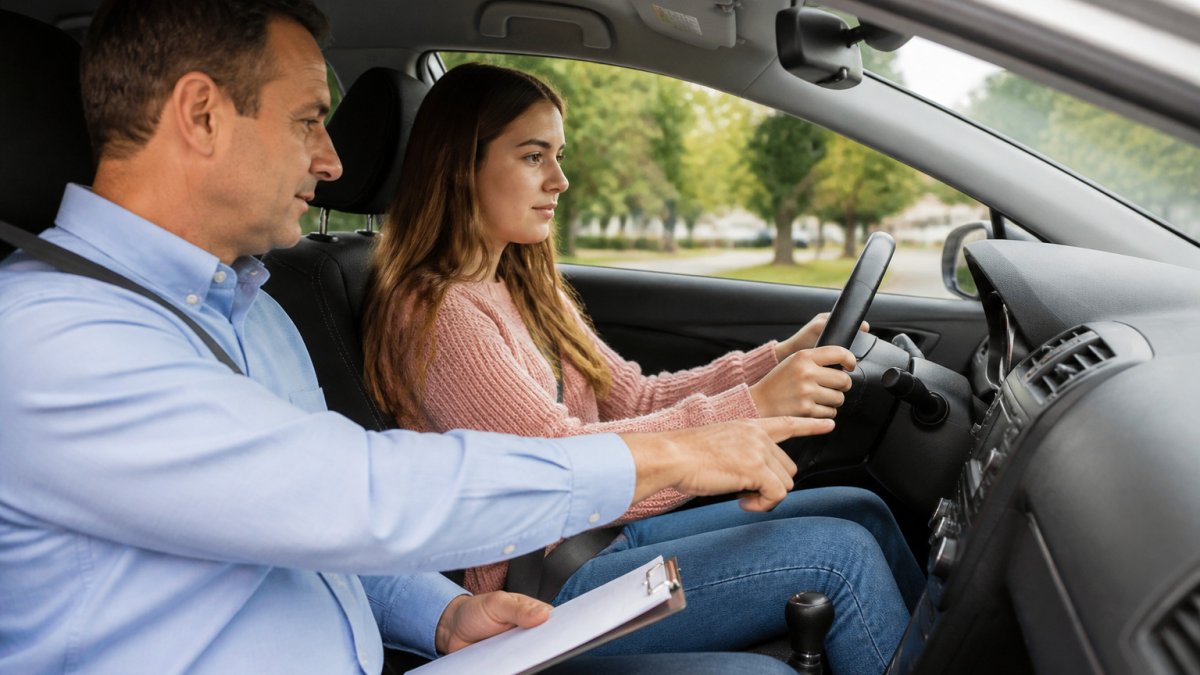
Private lessons are tailored to the individual. An instructor assesses your strengths and weaknesses, then focuses practice on where you struggle most: if you're confident on highways but anxious in parking lots, you spend more time on parking. A traditional school moves through all topics equally.
The trade-off: structure provides accountability and ensures nothing is missed. Personalization focuses effort where it matters most for that specific learner. Pfister Auto Academy uses data-driven instruction, analyzing performance from the online course to inform which real-world skills need the most practice time.
Flexibility and Scheduling
Driving schools operate on a fixed schedule: classes meet at specific times, and you commit to those dates. That predictability helps families plan ahead, but it's inflexible if your schedule shifts.
Private lessons offer scheduling flexibility: book sessions around your availability, reschedule a busy week, or add sessions before the test. That's particularly valuable for young adults balancing work or college, or families juggling multiple commitments.
The downside of flexibility is that it requires discipline. Without a fixed schedule, some learners procrastinate. The structure of a driving school can actually be an advantage if you need external accountability.
Pfister Auto Academy's concierge service, including door-to-door pickup and drop-off, removes scheduling friction. You don't need to arrange transportation to and from lessons, which saves time and simplifies logistics for busy families.
Test Preparation and Outcomes
Traditional driving schools are built around test preparation: their reputation depends on pass rates, so the curriculum covers everything the test covers and instructors know what examiners look for.
Private lessons can be equally thorough, but the quality and focus depend on the individual instructor's experience and knowledge of local test requirements. A master educator with 20+ years of experience knows the test inside and out. A newer instructor might not.
One critical advantage of private lessons: your instructor can administer the official driving test. That eliminates testing with a stranger and scheduling a separate BMV appointment. You've built rapport with your instructor and test in a vehicle you've practiced in extensively, which reduces test-day anxiety and increases the likelihood of a first-attempt pass.
How Many Driving Lessons Do I Need to Be Ready?
This is the question that determines whether private instruction makes financial sense for you.
The answer depends on your starting point: a learner with no experience needs more hours than someone who's practiced informally with family. Natural aptitude, confidence level, and how quickly you absorb feedback also matter.
On average, new drivers need between 20 and 50 hours of professional instruction to be test-ready. Some reach readiness in 15 hours; others need 60 or more. The variation is significant.
Here's what influences your number:
Prior practice: If you've logged 20 hours of informal practice with family, you might need only 20 hours of professional instruction. If you're starting from zero, you might need 40.
Learning pace: Some learners grasp clutch control or lane positioning in one session. Others need three. This isn't about intelligence, it's about how your brain processes spatial and motor information.
Confidence level: Anxious learners often need more repetition to build confidence. Overconfident learners sometimes need fewer hours but might benefit from more.
Test difficulty in your area: Some states' driving tests are more challenging than others. Some examiners are stricter than others. Your instructor knows your local test and can calibrate your readiness accordingly.
The structured approach of a program like Pfister Auto Academy, combining online theory with behind-the-wheel practice, often reduces the total hours needed. You're not wasting time on concepts you've already mastered online; you're practicing real-world skills immediately.
Factor | Impact on Hours Needed | What This Means |
Zero prior practice | +15-20 hours | Start from the beginning |
10-20 hours informal practice | +10-20 hours | Builds on existing foundation |
High confidence, quick learner | -5-10 hours | Fewer repetitions needed |
Anxious learner | +10-15 hours | More repetition for confidence |
Strict local test standards | +5-10 hours | Higher bar for readiness |
Real Benefits of Professional Instruction
The tangible advantages of professional driving instruction go beyond just passing the test.

Compressed learning timeline. An instructor identifies gaps immediately and corrects them, so you don't spend 20 hours practicing the same mistake. Most learners reach test-readiness 30-50% faster with professional instruction than with informal practice alone.
Safety focus. Professional instructors teach defensive driving principles from day one. They emphasize hazard recognition, vehicle control in emergency situations, and decision-making at speed. These skills don't always show up on the driving test, but they keep you alive on the road.
Confidence building. Anxiety is the biggest barrier for many new drivers. An experienced instructor builds confidence systematically: you practice in a safe environment, receive consistent feedback, and gradually increase difficulty, so by test day you've handled situations more demanding than the test itself.
Structured feedback. Family members often give vague feedback ("You're too close to the edge") or emotional reactions ("That was scary!"). Professional instructors give specific, actionable feedback ("Move your steering input 30 degrees to the left and hold it for two seconds"). This specificity accelerates learning.
Familiarity with test conditions. Your instructor knows the exact routes used for the driving test, the common failure points, and what examiners prioritize. You practice these specific scenarios repeatedly.
When Private Driving School Makes the Most Sense
Private instruction is the strongest choice for specific learner profiles.
You're starting from zero. With no prior experience and no family available to practice with, professional instruction is nearly essential.
You're anxious about driving. Driving anxiety is common and legitimate. Professional instructors are trained to work with nervous learners. They control the pace, choose lower-stress environments initially, and build confidence systematically.
You're testing on a tight deadline. If you need to be test-ready in 2-3 months, professional instruction is more efficient than hoping informal practice will get you there. The structured approach ensures you're practicing the right skills in the right order.
Your family doesn't have time or patience. This is honest and practical. If your parent works long hours or gets frustrated teaching, professional instruction removes that tension from your relationship. It also ensures consistent, professional feedback rather than emotional reactions.
You're an adult learner. If you're 20+ and just getting your license, professional instruction is particularly valuable: adult learners often have more anxiety, less practice time, and higher expectations for efficiency, and a professional instructor can compress timelines accordingly.
You want test-day confidence. If testing with your instructor, the person you've trained with, is available, that's a significant advantage. You eliminate the stress of testing with a stranger and in an unfamiliar vehicle.
Making Your Decision: Questions to Ask Before Enrolling
Before committing to private instruction, ask yourself these questions honestly.
Do I have the time to practice? Professional instruction works best combined with practice between lessons.
What's my learning style? If you learn best through repetition and personalized feedback, private instruction fits.
What's my confidence level starting out? If you're terrified, professional instruction is worth the investment. If you're reasonably comfortable and just need refinement, informal practice with a family member might suffice.
How much time do I have? If you need to be test-ready in 6 weeks, professional instruction is nearly essential. If you have 6 months, informal practice with occasional professional lessons might work.
What's my budget? Be honest about what you can afford. Professional instruction is an investment. If the cost creates financial stress, it's not the right choice, no matter the benefits.
What are my local test requirements? Research your state's driving test. How many hours of instruction are recommended? What's the pass rate? What are common failure points?
The decision isn't about whether private driving instruction is universally "worth it", it's about whether the specific benefits (compressed timeline, personalized instruction, confidence building, higher pass rates) address your needs and constraints.
For new drivers starting from zero, anxious learners, or anyone on a tight deadline, professional instruction delivers clear value.
At Pfister Auto Academy, we work with learners across all these profiles.
Frequently Asked Questions
Are private driving lessons worth it compared to learning from family?
Private driving lessons offer structured instruction from a licensed professional who teaches defensive driving techniques and test requirements, whereas family teaching often lacks formal curriculum. A professional instructor can identify and correct bad habits early, provide objective feedback without emotional strain, and prepare you specifically for the driving test. Family practice remains valuable for building hours, but professional instruction typically accelerates skill development and test readiness.
How many driving lessons do I need before I'm ready for the test?
Most learners benefit from 15 to 30 hours of professional instruction combined with supervised practice. Your specific need depends on your learning pace, prior driving experience, and how quickly you master key skills like highway driving, parking, and defensive maneuvers. A professional instructor can assess your progress and recommend additional lessons if needed, rather than guessing or rushing unprepared into the test.
What makes private driving school different from traditional driving school?
Private driving lessons typically offer one-on-one, personalized instruction tailored to your pace and weak areas, while traditional driving schools often use classroom settings and group lessons. Private instruction provides flexible scheduling, individualized feedback, and the ability to focus on your specific challenges, such as highway anxiety or parallel parking. Traditional schools may offer structured theory courses and lower per-hour costs but less customization.
Can private driving lessons help me pass the test on my first attempt?
Professional instruction significantly improves first-attempt pass rates by ensuring you understand test requirements, practice test scenarios, and develop the muscle memory needed for safe driving. A qualified instructor teaches you what the examiner looks for and corrects errors before test day. While no instructor can guarantee a pass, structured professional training addresses the skills and knowledge gaps that cause most test failures.
Log In

Comments