5 Ways to Build Confidence Behind the Wheel
Last Updated: October 23, 2026
Quick Summary
To build confidence behind the wheel, start with small steps in low-stress environments like empty parking lots and quiet residential streets, then practice consistently at least three times per week for 30 to 45 minutes per session. Regular practice builds muscle memory and normalizes driving, while managing anxiety through structured techniques and defensive driving skills helps you feel prepared and in control.
Practice at least three times per week for 30 to 45 minutes per session to build muscle memory and normalize driving.
Use a five-minute pre-drive routine including box breathing, naming your route, and setting one realistic goal to manage anxiety before you start.
Master each skill in low-stress environments before moving to busier roads: parking lots first, then quiet residential streets, then moderate traffic.
Check mirrors every five seconds, maintain a three-second following distance, and signal early to practice defensive driving techniques.
If anxiety spikes while driving, pull over safely, do two minutes of slow breathing, and decide whether to continue, reroute, or end the session.
Table of Contents
Start With Small Steps in Low-Stress Environments
Practice Regularly to Build Driving Experience
Manage Driving Anxiety Tips for Calm Behind the Wheel
Before the drive: a five-minute pre-drive routine
During the drive: in-car techniques that keep you safe
If anxiety spikes mid-drive: a safe pull-over plan
Facing a specific fear directly
Learn Defensive Driving Techniques to Stay Safe
Rebuild Confidence After a Bad Driving Experience
Refresh Your Road Rules and Driving Skills
Start with the rules that come up constantly
Practice skills by situation, not just by skill
Know when to pause and when to step up
Consider a formal refresher course
How Professional Instruction Accelerates Your Progress
Frequently Asked Questions
Start With Small Steps in Low-Stress Environments
To build confidence behind the wheel doesn't happen overnight. Quiet residential streets let new drivers focus on basic skills without feeling overwhelmed.

Start where you feel safe: empty parking lots for steering, acceleration, and braking, then quiet roads with light traffic.
At Pfister Auto Academy, we recommend this approach.
Here's what small steps look like in practice:
Week 1: Parking lot drills for steering and stopping
Week 2: Quiet residential streets with no traffic lights
Week 3: Slightly busier residential areas with a few intersections
Master each skill before moving forward. Rushing into heavy traffic too soon creates anxiety that can stick with you for months.
Pro Tip Don't practice on the same route every time. Repeat the same quiet road three times, then move to a different quiet road. This builds adaptability while keeping stress low.
Practice Regularly to Build Driving Experience
Consistent practice separates confident drivers from anxious ones; sporadic lessons create gaps.
Most new drivers benefit from practice at least three times per week. Each session doesn't need to be long: 30 to 45 minutes of focused practice beats one long session a month.
Regular practice builds muscle memory for steering, braking, and lane positioning, and normalizes driving so it feels less intimidating.
Track your progress with small, measurable wins:
Session 1: Smooth stops at three consecutive stop signs
Session 2: Complete one turn without jerking the wheel
Session 3: Drive for 15 minutes without the instructor correcting anything
These wins add up. After 10 sessions of regular practice, you'll build confidence behind the wheel and notice a real shift in how comfortable you feel.
Key Takeaway The difference between a confident driver and an anxious one often comes down to total hours behind the wheel. Consistency matters more than intensity.
Manage Driving Anxiety Tips for Calm Behind the Wheel
Driving anxiety is real and common: your heart races, your hands grip the wheel too tight, your mind jumps to worst-case scenarios. What most advice leaves out is a structured protocol, what to do before you turn the key, while you're moving, and if anxiety spikes mid-drive. That structure turns relaxation tips into a repeatable skill.
Before the drive: a five-minute pre-drive routine
Anxiety starts before the engine does. A short, consistent routine signals your body that driving is a controlled activity, not a threat.
Sit in the parked car for 60 seconds. Adjust the seat, mirrors, and steering wheel before moving, rushing this forces adjustments while the car is in motion, a common anxiety trigger.
Do four rounds of box breathing. Inhale for four counts, hold for four, exhale for four, hold for four. It's a common stress-management technique you can do without closing your eyes.
Name the route out loud. Say where you're going and the two or three turns you'll take. Naming the plan reduces the unknown, a major driver of anticipatory anxiety.
Set one realistic goal for the session. "I will complete this route without pulling over" is a goal. "I will feel completely calm" is not, feelings aren't fully under your control.
Put your phone in the glove box or a mount. Fumbling for a phone is both a safety risk and an anxiety trigger.
During the drive: in-car techniques that keep you safe
The goal during a drive is not to eliminate anxiety but to keep it from interfering with safe control of the vehicle. Use these techniques while moving or at a safe stop.
Loosen your grip every few minutes. White-knuckling restricts steering feel and tires your forearms. Relax your fingers while keeping both hands at 9 and 3 o'clock.
Drop your shoulders and unclench your jaw. Anxiety collects there; a deliberate release every few minutes breaks the tension cycle.
Use red lights as reset points. At each red light, take three slow breaths and check your mirrors. This turns waiting time into a calming ritual instead of a chance to spiral.
If anxiety spikes mid-drive: a safe pull-over plan
Even with preparation, anxiety can rise while you're moving. The safest response is a planned pull-over, not a push-through.
Signal early and check your mirrors. Do not brake abruptly.
Pull into a safe, legal spot, a parking lot, a wide shoulder, or a side street. Avoid narrow shoulders or travel lanes.
Put the car in park and turn on your hazard lights if other drivers may not expect you there.
Do two minutes of slow breathing and name what triggered the spike, a near-miss, a merge, a bridge. Naming the trigger makes it a specific problem rather than vague dread.
Decide: continue, reroute, or end the session. All three are valid. Ending early is not failure, it's a safety decision that preserves your willingness to drive again tomorrow.
Watch Out If anxiety is severe enough that you feel physically ill, cannot function in the car, or find yourself avoiding driving altogether, talk to a qualified mental-health professional. Driving anxiety sometimes connects to broader anxiety patterns that deserve proper support. A licensed therapist or counselor can help you address the underlying pattern, and a driving instructor can help you rebuild skills separately.
Facing a specific fear directly
Identify one specific fear and practice just that in a controlled setting. Afraid of lane changes? Spend a whole session on them on a quiet road. Afraid of reversing? Practice for 20 minutes in an empty lot. Keep the setting below your skill ceiling so exposure builds confidence rather than reinforcing fear.
Key Takeaway Anxiety management is not about feeling calm before you drive. It is about having a plan for the moments when you don't feel calm, and knowing that pulling over is a skill, not a failure.
Learn Defensive Driving Techniques to Stay Safe
Safe driving is confident driving. When you know the rules and can anticipate problems, you drive with less fear because you feel prepared.
Defensive driving means staying aware of everything around you: check your mirrors every five seconds, scan for hazards, and anticipate what other drivers might do.
Key defensive driving techniques include:
The three-second rule: Stay three seconds behind the car in front of you. This gives you time to stop if they brake suddenly
Smooth steering: Make gentle adjustments instead of jerky movements
Predictable speed: Maintain steady speed rather than speeding up and slowing down constantly
Learn the road rules cold. Many new drivers feel anxious because they're not sure what they're supposed to do.
Pro Tip Practice the same maneuver in different conditions: gentle turns in daylight, then the same turns at dusk, then during light rain. This builds confidence that you can handle variations of the same skill.
Rebuild Confidence After a Bad Driving Experience
One mistake or one scary moment can shake your confidence badly. You might avoid driving for weeks.
Start small after a setback. Don't jump back into the situation that scared you, return to quiet roads and basic skills.
Talk through what happened. What specifically went wrong, your mistake, another driver's, or bad luck?
Practice the exact skill that scared you in a safe environment first.
Key Takeaway A bad experience doesn't erase your progress. It's one data point, not your whole story as a driver.
Refresh Your Road Rules and Driving Skills
Knowledge gaps create anxiety: you're not sure you're doing something right, so you second-guess yourself. Refreshing your road rules and skills fills those gaps, but a generic list isn't enough. Drivers who build real confidence practice specific skills in specific situations, with clear boundaries for stepping up difficulty.
Start with the rules that come up constantly
Review your state's official driver's manual, especially the sections affecting moment-to-moment decisions:
Right-of-way rules at intersections, four-way stops, and uncontrolled crossings
Speed limits and how they change in school zones, work zones, and residential areas
Safe following distances and how they change with speed and weather
Knowing these cold removes doubt from your decision-making. When you don't pause to remember who goes first at a four-way stop, you free up attention for scanning and planning.
Practice skills by situation, not just by skill
Parking. Start with pull-through parking in an empty lot, then perpendicular parking between two parked cars in a quiet lot, then parallel parking on a quiet street with no traffic behind you, then parallel parking with light traffic. Each step adds one variable at a time.
Highway driving. Start on a quiet stretch during off-peak hours, practicing entering, maintaining speed, changing lanes, and exiting. Then moderate traffic, then heavier traffic.
Night driving. Start on well-lit residential streets you know, then well-lit arterial roads, then unlit rural roads or highways once you're comfortable with the well-lit versions.
Bad weather. Start with light rain on roads you know, then heavier rain.
Heavy traffic. Start with moderate traffic on roads you know, then rush hour on a route you've already driven in light traffic.
Know when to pause and when to step up
Progression should be based on performance, not a calendar. Move up when you can complete the current level smoothly three times in a row without a correction, near-miss, or anxiety spike. After a frightening moment, drop back a level for a session or two, that's how skill-building works.
Pro Tip Keep a simple practice log. For each session, note the setting, the skill, and a one-word rating: smooth, okay, or rough. After a few weeks, the log shows you exactly which situations need more practice and which are ready to step up. It also gives you concrete evidence of progress on days when confidence feels low.
Consider a formal refresher course
If you've been driving inconsistently or returning after a long break, a formal refresher course can identify knowledge gaps and correct bad habits before they become ingrained. An instructor can also design a progression plan tailored to the situations that make you most anxious.
Key Takeaway Refreshing your skills is not about relearning everything. It is about practicing the specific skills in the specific situations where you will use them, and stepping up only when your performance, not your calendar, says you're ready.
How Professional Instruction Accelerates Your Progress
Professional instruction cuts your learning curve in half.
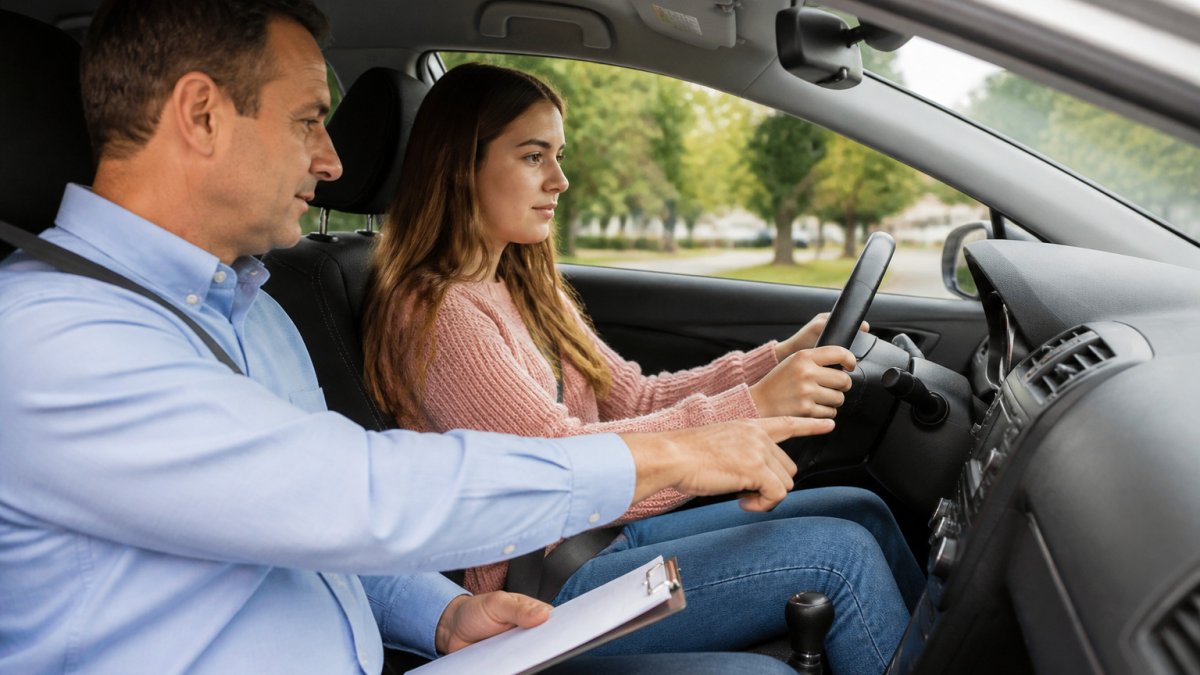
Pfister Auto Academy combines personalized instruction with data-driven feedback.
The optional hat camera review is particularly valuable: you see exactly what you did right and where to improve.
Here's what professional instruction covers:
Safe route planning and traffic awareness
Smooth vehicle control in all conditions
Defensive driving strategies for real-world situations
The combination of structured online learning, personalized in-car instruction, and professional support creates real results.
Building confidence behind the wheel takes time, but it doesn't have to feel overwhelming. Start small in quiet environments.
Confidence-Building Step | Time to Master | Best Practiced In |
Parking lot basics | 2-3 sessions | Empty parking lot |
Quiet residential roads | 4-5 sessions | Low-traffic neighborhoods |
Roads with traffic lights | 3-4 sessions | Moderate-traffic areas |
Highway merging | 2-3 sessions | Quieter highway stretches |
Night driving | 3-4 sessions | Well-lit residential areas first |
Adverse weather | 2-3 sessions | Light rain or wet conditions |
Frequently Asked Questions
How often should a new driver practice to build confidence?
New drivers benefit from consistent, frequent practice rather than long, infrequent sessions. Aim for 3-4 practice drives per week, starting with 20-30 minute sessions in low-stress environments. As your comfort grows, gradually extend session length and introduce more challenging routes. Regular repetition builds muscle memory and reduces anxiety behind the wheel, helping you progress from quiet roads to busier traffic steadily.
What should I do if I feel anxious while driving?
If anxiety strikes while driving, use practical in-car techniques: focus on your breathing with slow, deep breaths; reduce speed to a safe, comfortable pace; pull over safely if needed to regain composure. Positive self-talk helps, remind yourself of previous successful drives. Avoid distractions and stay on familiar routes until your confidence returns. A supportive passenger can also provide reassurance and encouragement during challenging moments.
How can I rebuild confidence after a bad driving experience?
After a difficult experience, start with small, controlled practice in quiet, low-stress environments to remind yourself of your abilities. Refresh your knowledge of road rules and safe driving techniques. Practice the specific situation that caused anxiety in a gradual way, for example, if a difficult lane change upset you, practice gentle turns and lane changes on quiet roads first. Professional instruction from an experienced driver educator can help you process the experience and develop safer habits.
What defensive driving techniques help new drivers stay safe?
Core defensive driving techniques include maintaining a three-second following distance, scanning the road ahead for hazards, signaling early before turns and lane changes, and adjusting your speed for road and weather conditions. Stay aware of other vehicles and anticipate their moves. Practice smooth acceleration, steady braking, and controlled turns. These skills reduce stress by giving you more reaction time and control, which naturally builds confidence as you see yourself handling situations safely and predictably.
Log In
Add pfisterautoacademy.com as a preferred source on Google →


Comments